When AI Was Bad: Terminator 2: Judgment Day Turns 35
Thirty-five years ago, we knew AI was bad. We were a proper nation. Writer/director James Cameron scared the pants off us with his chilling vision of the future. It’s a shame how short our memories are.
James Cameron kicked off the sci-fi franchise with The Terminator in 1984. As was typical of a mid-80’s movie, The Terminator leaned into horror a bit while still being a sprawling sci-fi epic. If you’re not familiar, the Terminator universe involves a dystopian future Earth marred by a nuclear war started by sentient AI to wipe out humanity. A hero, John Connor, rises from the populace to fight back against the machine overlords, which prompts them to repeatedly send assassins back through time to eliminate Connor by whatever means necessary. In The Terminator, that means killing John’s mother, Sarah; in T2, they go after John himself.
Up to speed? Good.
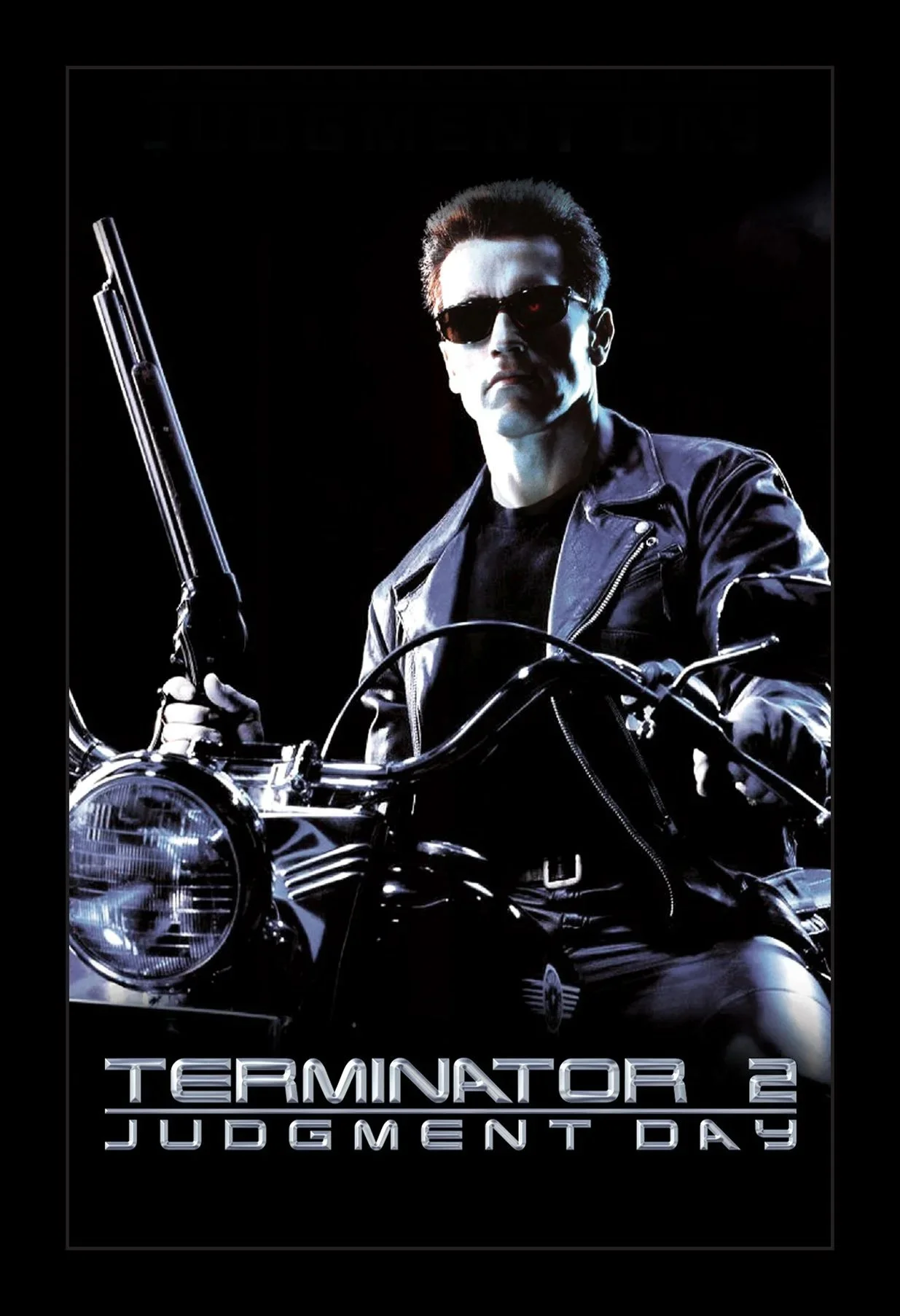
Terminator 2: Judgment Day was an upgrade over its predecessor in every conceivable way. Cameron had proven the concept and himself with the original, but wanted to tell a bigger story with the sequel. At the time, it was the most expensive movie ever made, and every bit of that money is on screen. Cameron wanted to push the limits of visual storytelling, special effects, and science fiction itself, and he accomplished this. Big time.
Let’s get this out of the way: Terminator 2 is a perfect movie. It is the gold standard to which all sci-fi movies that followed would and should be measured. For many, this type of popcorn movie is an opportunity to shut off your brain and veg out in the theater. But T2 proved you could have an amazing story, a well-crafted movie with big-budget explosions. Between Terminator and Terminator 2, James Cameron honed his skills with the excellent Aliens and groundbreaking The Abyss. These movies showed that Cameron could do wonders with enough money, and boy, did he. The story lays off the horror elements and even injects some humor into the otherwise bleak proceedings to reach a wider audience. And it works really well.
T2 opens with the same basic idea as the original. The Terminator, played by Arnold Schwarzenegger, and what we assume is his foil, played by Robert Patrick, appear, naked, in the then-present, having been sent from the future to…do stuff. Both of our intrepid time travelers immediately begin searching for John Connor (Edward Furlong). John is in foster care, his mom, Sarah (Linda Hamilton) having been institutionalized following the events of the first film.
There is a super important twist that happens in this movie that defines spoiler alerts for the future. MOVING FORWARD, WE WILL BE DISCUSSING THIS MOVIE, ASSUMING YOU’VE SEEN IT AND KNOW THE TWIST.
Have you seen T2? No? Go watch it.
OK, we’ve ALL SEEN T2, right? Right? Good.
So, we learn that Skynet, the sentient AI behind the murder of countless human beings, has created an advanced Terminator model, the T-1000, a Liquid Metal monster who has been sent to kill John. Future John has reprogrammed an older model, the titular Terminator model T-100, to stop the T-1000 and save himself.
This sets off a spectacular 2-plus-hour chase through Los Angeles, where the unrelenting T-1000 will stop at nothing until John is dead. Luckily, the T-100 is just as determined to protect him. We soon discover that the T-100 must follow John’s orders, sending them off track to save Sarah and putting them all in more danger.
There are absolutely mind-blowingly spectacular set pieces along the way. Huge explosions, unbelievable special effects, particularly around the Liquid Metal T-1000, which can morph into any (non-complex) object it touches, including rudimentary metal weapons like swords and knives.
No Fate But What We Make
Our trio of heroes decides to end all of these horrors by stopping Skynet itself. Sarah tells John, “The future has not been written. There is no fate but what we make for ourselves.” This side quest builds to our final confrontation at Skynet headquarters and eventually a factory where the T-100 and T-1000 battle not just over the fate of the Connor family, but the fate of the future of humanity itself.
The lesson from Terminator 2 is as poignant now as it was then: AI is bad and will probably kill us all. Despite the grim warning, somehow humanity has decided to dive headfirst into a murky future led by AI. Sure, we’re using it to make stupid pictures and videos and to save a little bit of time at work, but the specific themes from these movies are relevant. Our government and governments around the world are ceding control of our computer and defense systems to AI, the exact thing that led to the creation of Skynet and the destruction of humanity. We’re laughing along, letting AI listen to us, take our notes, do our work, drive our cars- things we don’t NEED AI for. Now, while (I hope) we’re not looking at a future where time-traveling robots fight each other after nuclear annihilation of our species, AI is destroying us in other sinister and subtle ways. Data centers are destroying the environment. AI is stealing jobs. Programmers are vibe coding, letting AI make our apps and programs. And as mentioned earlier, militaries are deploying this technology across our defense and weapons systems. It’s as though we haven’t learned a god damn thing.
Terminator 2 is perfect. A science fiction action movie with a strong story, great acting, spectacular effects, a brilliant score, and an important message. 35 years on, we may not have learned a thing, but perhaps it’s not too late. The movie holds up; maybe its central message will as well. “The future has not been written. There is no fate but what we make for ourselves.”