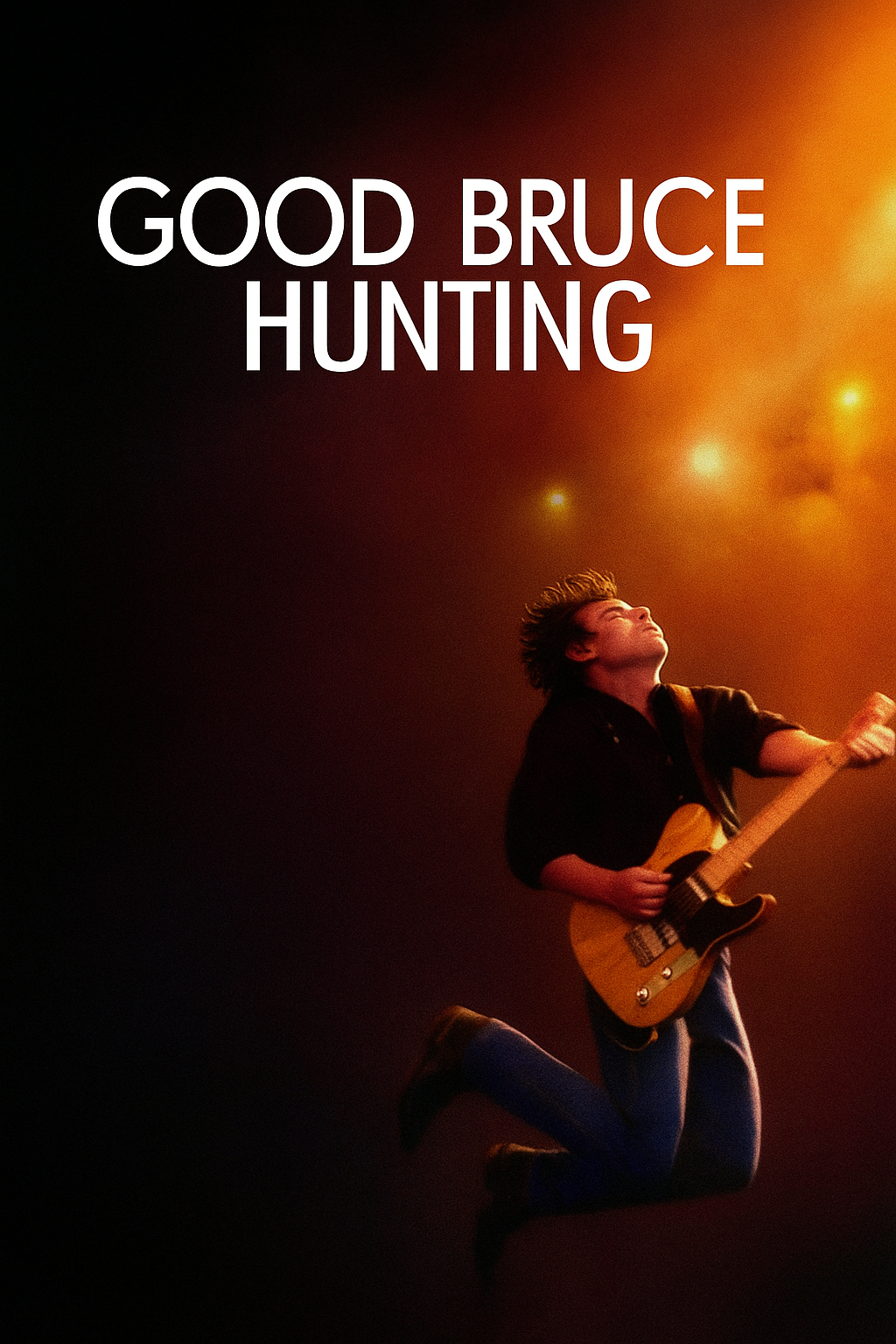
Good Bruce Hunting
A friend of mine said while discussing the Bruce Springsteen bio, Springsteen: Deliver Me From Nowhere, “I don’t understand why critics don’t appreciate character studies anymore.” It really got me thinking about the movie, character studies, and what makes a good story.
I recently watched Good Will Hunting. A film I’ve seen dozens of times, and I really love. I’ve often thought that Good Will Hunting is the closest thing we’d get to a Catcher in the Rye movie. Now, I think Springsteen: Deliver Me From Nowhere is a based on a true story remake of Good Will Hunting.
Stay with me.
Springsteen: Deliver Me From Nowhere tells the story of a poor kid from the East Coast who experiences some trauma in his childhood and ends up being a genius, which leads to opportunities he doesn’t necessarily want to pursue. There is a man who’d rather stay true to his working-class, neighborhood roots than feed the corporate machine. His closest relationship is with a good friend, who is more like a family member than a friend. He also embarks on a complicated relationship with a woman whom he has trouble really letting into his heart. Eventually, a breakthrough via therapy allows him to confront his demons and move forward with his life. Sound familiar?
Springsteen: Deliver Me From Nowhere tells the story of the Boss by focusing on a specific sliver of his life; the period after The River tour, the writing and recording of Nebraska, and the songs that would become Born In The USA. Focusing on one specific period of Springsteen’s career allows for a three-part narrative to be told without being too sprawling and exhaustive. It assumes the viewer knows Springsteen rose to superstardom, enough to tell the story. There are also flashbacks to Bruce’s childhood that establish his upbringing and the trauma that shaped his life.
Springsteen, played here expertly by Jeremy Allan White, is a genius much like Matt Damon’s Will Hunting. Where Hunting is a whiz at math, Springsteen is a master storyteller whose medium of expression is songwriting and performing. Both characters are shown demonstrating their areas of expertise, much to the amazement of anyone who sees it. Hunting is scooped up by MIT professor Gerald Lambeau (Stellan Skarsgard) while Springsteen is signed by Columbia Records and managed by Jon Landau (Jeremy Strong).
Both Hunting and Springsteen struggle with their gifts. For Hunting, it’s almost an embarrassment or burden, something that sets him apart from his peers in an irreconcilable way. He just wants to be one of the boys from Southie. Similarly, Springsteen longs to be a simple Jersey kid but his success is already starting to pull him away from his roots, something he struggles desperately to hang on to.
As their lives began to take a turn, Springsteen began work on a new album while recuperating from a grueling tour, and Will is working with Professor Lambeau while attending court-ordered therapy with Sean Maguire (Robin Williams). They embark on romantic relationships. These relationships each start sweetly, with dates at local haunts in Boston and Jersey, respectively. These interactions in the communities ground each character as part of their neighborhoods. Quickly, Bruce and Will begin to pull back from the relationships because they begin inventing barriers to the relationships, reasons they won’t work out, and that they believe they don’t deserve. Each film includes calls made by the protagonist to their love interests from pay phones outside bars.
Both Landau and Maguire serve as friends, father figures, and therapists. They’re family to Bruce and Will, respectively. Hunting and Springsteen breeze through their work; math and music come to them as easily as breathing while struggling with the weight of expectations. Hunting is expected to use his talents in a high-paying, high-profile, high-stress corporate or government job, while Springsteen is expected to deliver a new album soon to exceed The River and produce radio hits. Expectations that both bristle against.
Springsteen eventually writes the songs that will become the monster hits of Born in the USA, but he’s stuck on more personal, darker, acoustic tunes he wrote and recorded in the bedroom of a rented house in Jersey. Ultimately, both of their mentors support their decisions, and both of their relationships have rocky endings.
Both movies climax with each character experiencing breakthroughs in therapy, which enable them to move forward, confront their demons, and face their pasts. For Will, he hits the road to reconcile with Skyler (Minnie Driver), and for Bruce, he reconciles with his pop and hits the road.
Beyond similar stories and structures, the movies themselves feature similar scenes. The aforementioned phone calls from pay phone booths. Will’s foster father and Bruce’s father are both shown ascending staircases, portending abuse of the characters as boys. Both characters receive cars they don’t think they deserve. Brooding scenes outside. Appropriate music soundtracks each scene as if selected by a divine DJ.
Good Will Hunting, a fictional tale of an imperfect genius facing his demons, and Springsteen: Deliver Me From Nowhere, a stylized biopic of an imperfect genius facing his genius, share many similarities in both tone, narrative structure, scenes, soundtrack, and feeling. Both films are excellent character studies, brilliantly told by talented filmmakers. How do you like them apples?